Quick answer: choose bedroom curtains by the job the window has to do. Layer a sheer with a room-darkening or blackout panel when you want soft daylight and better night coverage; choose a single linen-look panel when the room needs texture more than darkness. Check the window, bed, radiator, and floor as one composition, then compare the shortlist with AI bedroom design before you buy samples.

Check Light, Privacy, and Bedside Clearance First
Before saving bedroom curtain design ideas, write down what each window needs to do.
- Track daylight. Bright morning sun, hot afternoon exposure, and a shaded opening need different levels of filtering.
- Plan privacy for day and night. Sheers may screen the view in daylight but reveal the room after dark.
- Consider sleep schedules. Early sun, shift work, naps, and street lighting can outweigh a decorative pattern.
- Measure bedside clearance. A headboard, nightstand, radiator, door, or low sill can limit panel length and stacking space.
- Check the whole bed wall. Coordinate curtain color and width with the bedding, wall, and window shape.
10 Modern Curtain Designs for Bedroom Spaces
Use these looks as starting points, then adjust them to your window and sleep routine.
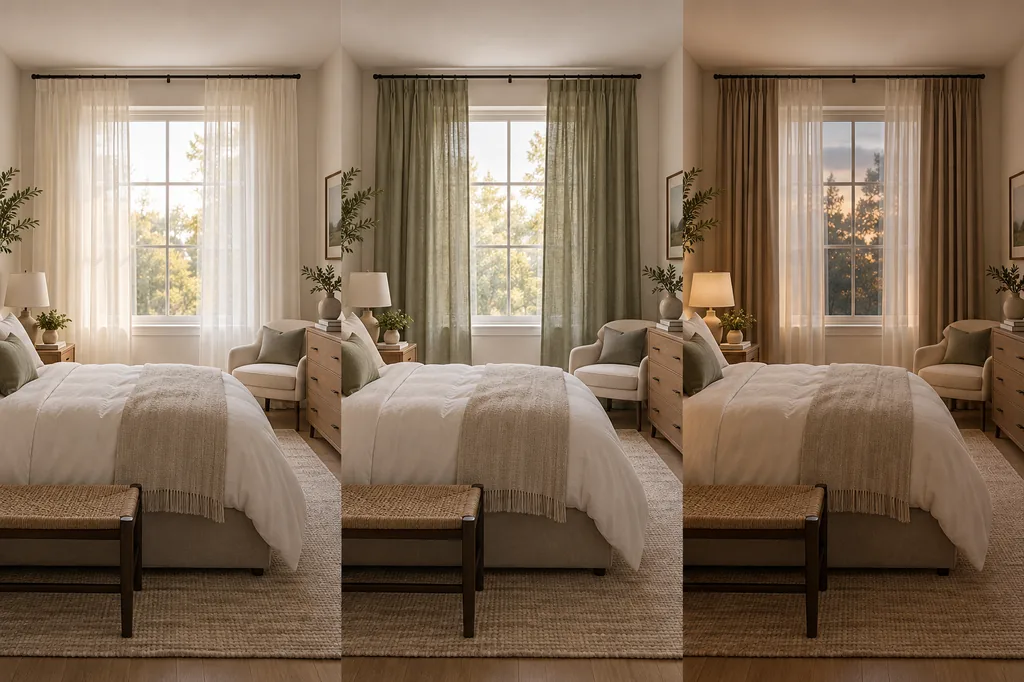
1. Layered sheer and blackout panels
Pair an inner sheer with a room-darkening outer layer. Move each independently for filtered daylight or better night coverage.
2. Full-height linen-look curtains
Matte linen-look fabric adds texture without a busy print. A clean floor-length hang gives the window a longer line.
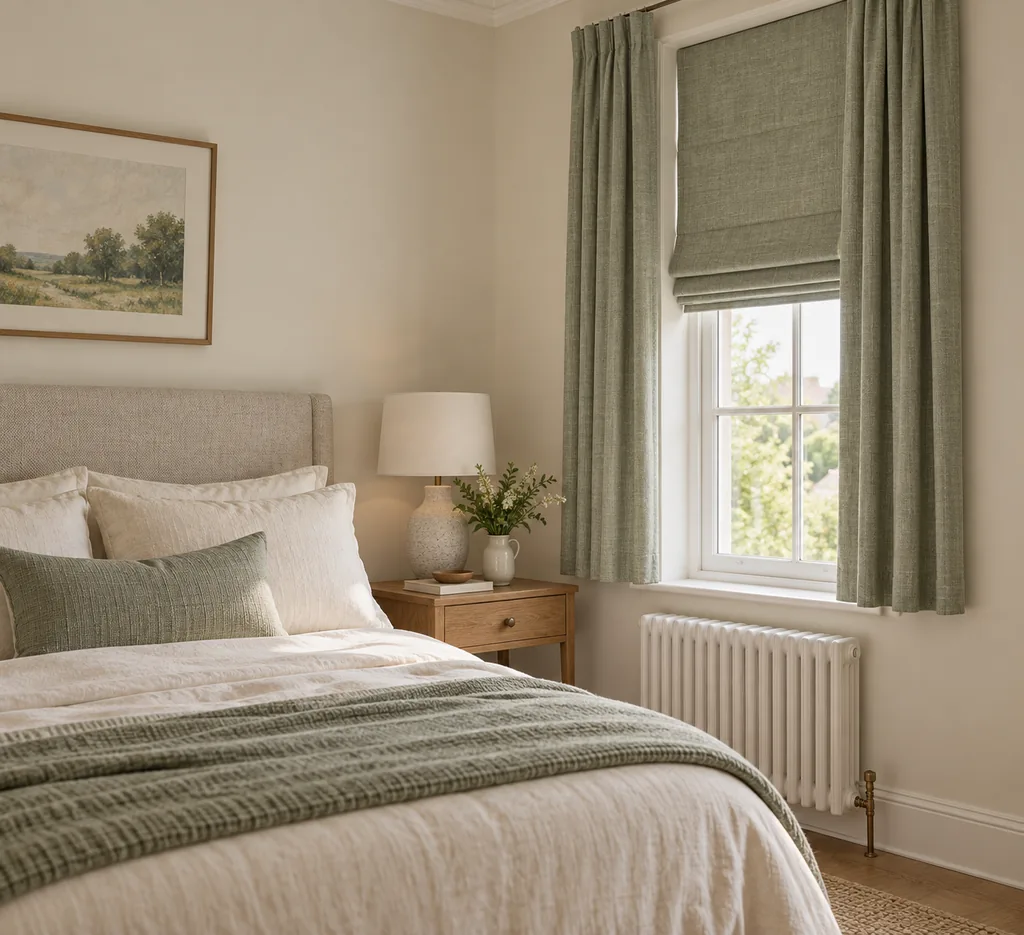
3. A Roman shade with side panels
Cover the glass with a shade and soften the wall with narrow side panels, keeping fabric clear of bedside furniture.
4. Curtains that frame the headboard wall
Where the layout allows, extend panels beyond a broad window to connect it visually with the bed.
5. Warm ivory, oat, or greige
Warm neutrals sit easily beside wood and textured bedding. Compare a swatch against the wall and duvet.
6. Muted green or blue panels
Sage, olive, or softened blue adds color without a strong print. Repeat one shade in a cushion or throw.
7. Low-contrast stripes
Subtle vertical stripes add rhythm to plain bedding and walls, reading more like texture than a bold motif.
8. Small-scale botanical prints
A restrained botanical softens a plain bedroom. Choose background and leaf colors already present in the room.
9. Deep charcoal, forest, or ink
Dark matte fabric can make a bright bedroom feel more enclosed. A visible weave keeps the panel from looking flat.
10. A compact sill-length treatment
A shade or short panel can clear a desk or nightstand below the window while keeping the sill usable.
Choose Bedroom Curtain Length, Width, and Layers
Careful measuring matters more than a particular trend. Rod type, lining, fullness, and floor level change the finished result; confirm specifications with the retailer.
| Decision | Planning direction | Check before ordering |
|---|---|---|
| Rod or track height | Mount above the window when the ceiling and trim allow. | Check molding, wall fixing, and window operation. |
| Panel width | Cover the glass and allow overlap when curtains close. | Confirm finished width, fullness, and open stack space. |
| Panel length | A floor kiss is easy to maintain; a break is a style choice. | Measure from track to floor and account for hems, vents, and floor slope. |
| Layer arrangement | Keep the sheer nearest the glass and the heavier panel outside it. | Use a double track that lets both layers move. |
| Lining and fabric | Match opacity and texture to sleep, daylight, and privacy. | Check care details and view a swatch in both lighting conditions. |
Preview Bedroom Curtains on a Room Photo
A visual preview can compare color and fullness before you request samples. It cannot verify opacity or replace measurements.
- 1. Photograph the whole window wall. Include the window, bed, floor, and ceiling line. Keep the phone level to preserve proportions.
- 2. Ask one design question at a time. Compare linen, sheer, or blackout options separately; changing several features obscures what worked.
- 3. Preserve the fixed room features. Keep the window, wall, bed, and viewpoint in place. Look for invented openings or moved furniture.
- 4. Review daytime and evening use. Check brightness and privacy in both conditions; a sheer may not screen an illuminated bedroom.
- 5. Confirm the shortlist in person. Order swatches, check lining and care, and remeasure the opening before installation.
Match the Window Treatment to the Bedroom
Start with the effect you want, then choose the fabric and color.
| Room priority | Useful direction | Trade-off to consider |
|---|---|---|
| Soft daylight | A sheer or light-filtering panel | Check nighttime privacy and glare at the brightest hour. |
| A darker sleep space | Lined room-darkening or blackout curtains | Light can still enter around the edges. |
| A quieter visual mood | Matte linen-look fabric in a warm neutral | Check color beside wood and warm bulbs. |
| A small room | A shade with compact side panels | Confirm handle and radiator clearance. |
| A stronger focal point | A deep color or restrained print | Keep bedding patterns quieter. |
What a Curtain Preview Cannot Confirm
An AI room image can make fabric folds look convincing while changing the window size, rod position, ceiling line, or bed scale. Use it to compare visual directions, not as a measurement drawing or a promise about the finished product.
A preview also cannot tell you a fabric's real opacity, texture, color under your bulbs, cleaning requirements, mounting strength, or suitability beside a heater. Check manufacturer specifications, obtain a swatch, and follow relevant product and installation guidance.
If a render looks right but leaves a gap at the sides, blocks a door, or crowds the nightstand, treat that mismatch as a reminder to recheck the opening and furniture clearance. Complex tracks, high windows, or heavy treatments may need a qualified installer.
FAQ About Modern Curtain Designs for Bedroom Spaces
What are the best modern curtain designs for bedroom spaces?
Layered sheers with room-darkening panels, full-height linen-look curtains, muted solid colors, and compact shade combinations are useful starting points. The best choice depends on sleep, daylight, privacy, window size, and the furniture around it.
Should bedroom curtains touch the floor?
A clean floor kiss is a practical finish for many bedrooms because it looks intentional and is easy to maintain. A slight break or puddle can be chosen for style, but it gathers more dust and may be less convenient around pets, children, or uneven floors.
Are sheer curtains enough for a bedroom?
Sheers can soften daylight and screen a view during the day. They usually do not provide full nighttime privacy when interior lights are on, so test the room after dark or add a lined outer layer.
Do blackout curtains make a bedroom completely dark?
Blackout fabric blocks light through the material, but light may still enter at the top, sides, or bottom. Rod placement, overlap, and the window opening affect the result, so check the whole perimeter if darkness is important.
How do I choose curtains for a small bedroom window?
A Roman or roller shade can cover the glass without using much wall or floor space. Side panels can add softness if they clear the bedside table, radiator, and window handles.
Can I preview bedroom curtains with AI before buying?
Yes. Upload a clear room image to the AI Bedroom Design tool and compare one fabric or color direction at a time. Confirm the result with fabric samples and actual measurements before ordering.
Compare Bedroom Curtain Ideas on Your Own Photo
Try a few curtain colors and coverage options in your bedroom image, then verify the preferred look with samples and measurements.
Try AI Bedroom Design