Quick answer: start by deciding what your living room needs from its windows. Sheer curtains keep daylight moving, lined panels add softness and privacy, and layered curtains give you the most control. For a room-specific shortlist, use the AI Living Room Design tool or design a room using a photo guide, then verify the real window width, rod position, fabric sample, and floor clearance before buying.
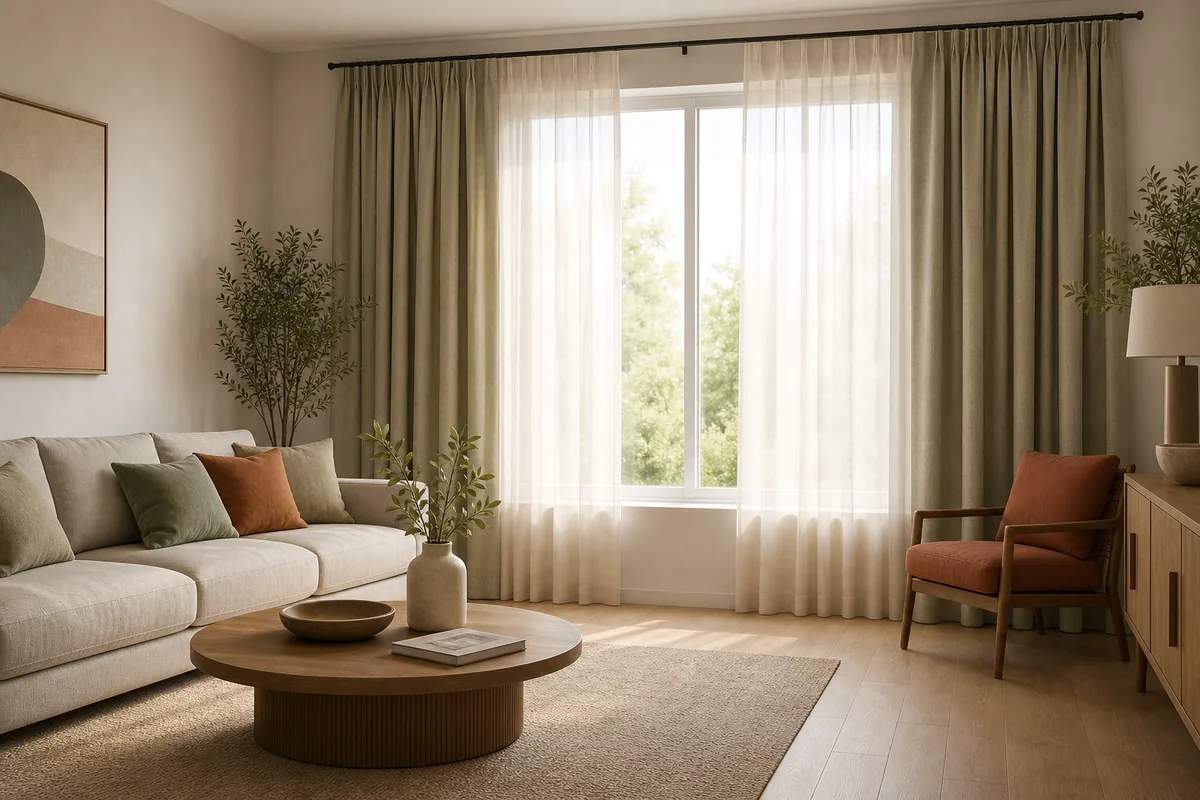
Start With Light, Privacy, and Window Proportions
Before collecting curtain designs, write down the practical job the window needs to perform. This keeps the article from becoming a mood board that looks good online but fails in the real room.
- Map the daylight: note whether the window receives bright morning light, harsh afternoon sun, or mostly indirect light. The same white sheer can feel airy in one room and glaring in another.
- Decide the privacy level: a living room facing a street may need a daytime voile, a lined side panel, or a layered setup rather than a single decorative curtain.
- Look at the window and wall as one shape: a rod placed wider and higher than the frame can make the opening feel larger, but only if the wall, trim, and furniture allow the extra width.
- Check furniture clearance: measure the distance from the sill, radiator, sofa arm, cabinet, and floor so the fabric will not bunch against a heat source or block a walkway.
- Choose the room mood: quiet neutrals, textured linen, graphic patterns, and deep blackout colors all change the visual weight of the living room before you add any new furniture.
12 Modern Curtain Designs for a Living Room
Treat these as twelve directions rather than twelve rules. A strong result usually combines one fabric idea with one practical light decision, then keeps the rod, sofa, rug, and wall color visually calm.
1. Full-height linen panels
Hang relaxed linen-look panels from a high rod to the floor for an architectural frame around the window. The texture adds warmth without the visual shine of synthetic satin, and the neutral surface works with wood, stone, or painted walls.
2. White sheer curtains
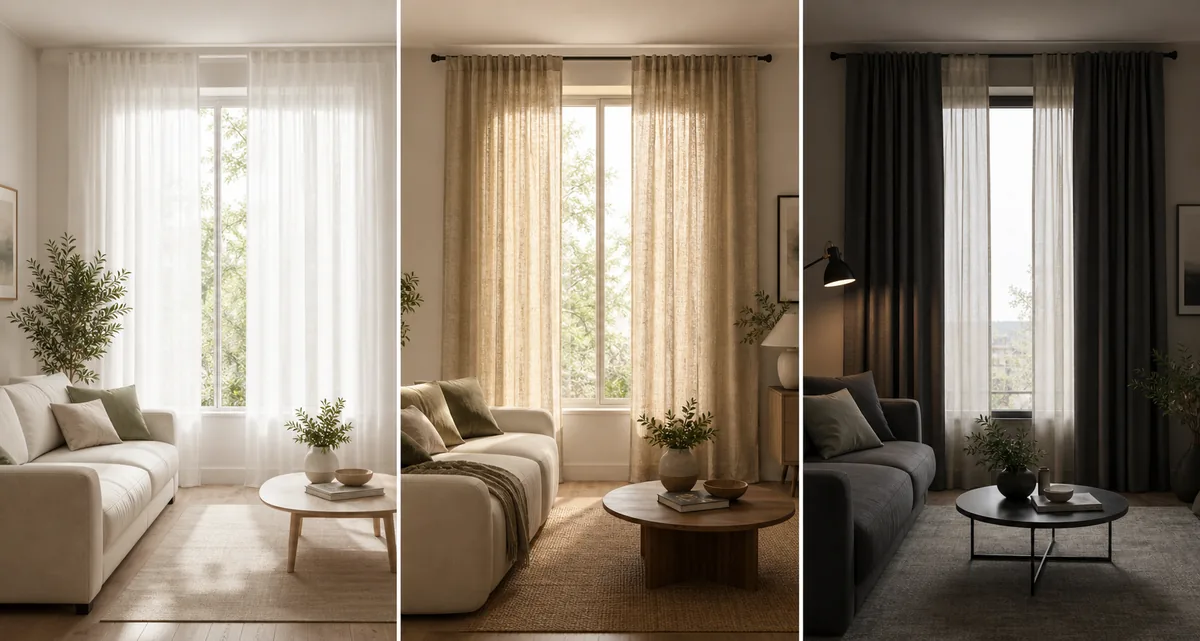
A lightweight sheer keeps daylight visible and makes a narrow or shaded living room feel less enclosed. Use it alone when privacy is moderate, or pair it with side panels when the room also needs evening coverage.
3. Layered sheer plus blackout panels
Two layers give you the most flexible daily routine: the sheer filters light, while the heavier side panels add privacy, insulation, and a darker evening mood. Keep both layers on the same visual axis so the window does not look crowded.
4. Warm oatmeal or greige curtains
Warm neutral curtains connect a pale wall with a wood floor and make a living room feel settled without becoming a feature wall. Look for weave and hem detail instead of relying on a strong pattern to create interest.
5. Soft charcoal panels
Charcoal curtains can anchor a large window and echo black lighting, frames, or a dark coffee table. They work best when the rest of the room contains enough light and the fabric has a visible weave rather than a flat, glossy finish.
6. Subtle vertical stripes
A narrow stripe can emphasize ceiling height and add pattern without competing with artwork or a patterned rug. Choose low-contrast lines that are visible up close but read as texture from across the room.
7. Botanical or abstract pattern
A restrained botanical or abstract print can become the room's soft focal point, especially when the sofa and walls are plain. Repeat one or two colors from the pattern in cushions or art so the curtain does not look isolated.
8. Two-tone curtain treatment
A darker side border, contrast hem, or two-tone panel adds structure to a wide window without requiring a loud print. It can also echo a console, a dark window frame, or a small accent color already present in the room.
9. Soft wave or ripple-fold panels
A wave or ripple fold creates consistent vertical lines and a clean contemporary profile. It suits a room where the curtain hardware should feel quiet and continuous rather than decorative.
10. Relaxed Roman shade with side curtains
A Roman shade handles the glass area while side curtains soften the wall and add height. This combination is useful when a full curtain would interfere with a desk, radiator, bay window seat, or low cabinet.
11. Natural woven shade with fabric panels
A woven shade brings texture and gentle filtering to the window, while fabric panels add a more finished frame. The mix works especially well with rattan, oak, linen upholstery, and warm neutral paint.
12. Deep color as a deliberate anchor
Forest green, ink blue, rust, or deep brown panels can make a large bright living room feel more grounded. Use a matte or textured cloth and repeat the color in only a few small accents so the window remains intentional rather than heavy.
Choose Curtain Length, Width, and Hardware
Many living room curtain problems are measurement problems disguised as style problems. The exact numbers depend on the window, rod, track, lining, and desired fullness, so use these principles as a planning guide and confirm the final specification with the retailer or installer.
| Decision | Practical starting point | What to check before ordering |
|---|---|---|
| Rod or track height | Place it high enough to give the wall a longer visual line, often above the frame when trim and furniture allow. | Check ceiling height, crown molding, window opening, and whether the track can be fixed securely. |
| Side-to-side width | Extend beyond the glass when possible so open curtains do not cover the view or reduce useful daylight. | Measure the full area the panels must cover, including overlap and the space needed for the stacked fabric. |
| Floor length | A clean kiss at the floor is easiest to maintain; a small break or puddle is a deliberate styling choice, not a measurement accident. | Account for the rod, rings, header, hem, floor slope, vents, pets, and the need to clean underneath. |
| Fullness | More fullness gives a richer fold; a flatter panel feels lighter and may suit a small room or ripple-fold track. | Ask how the listed width is calculated: finished panel width and fabric width are not always the same. |
| Light control | Use sheer, lined, room-darkening, or blackout layers according to the room's actual glare and privacy needs. | Check the lining color, care instructions, fabric sample, and evening privacy from outside the window. |
| Hardware finish | Match the rod or track to a repeated metal, wood, or black accent rather than matching every item in the room. | Confirm bracket depth, wall material, stud position, center support, and whether the curtain can open fully. |
Use AI to Preview Curtains on Your Room Photo
An AI preview is useful for comparing direction, not for manufacturing a precise curtain order. It can help you decide whether the room feels better with a sheer, warm linen, dark layer, pattern, or higher rod before you collect samples.
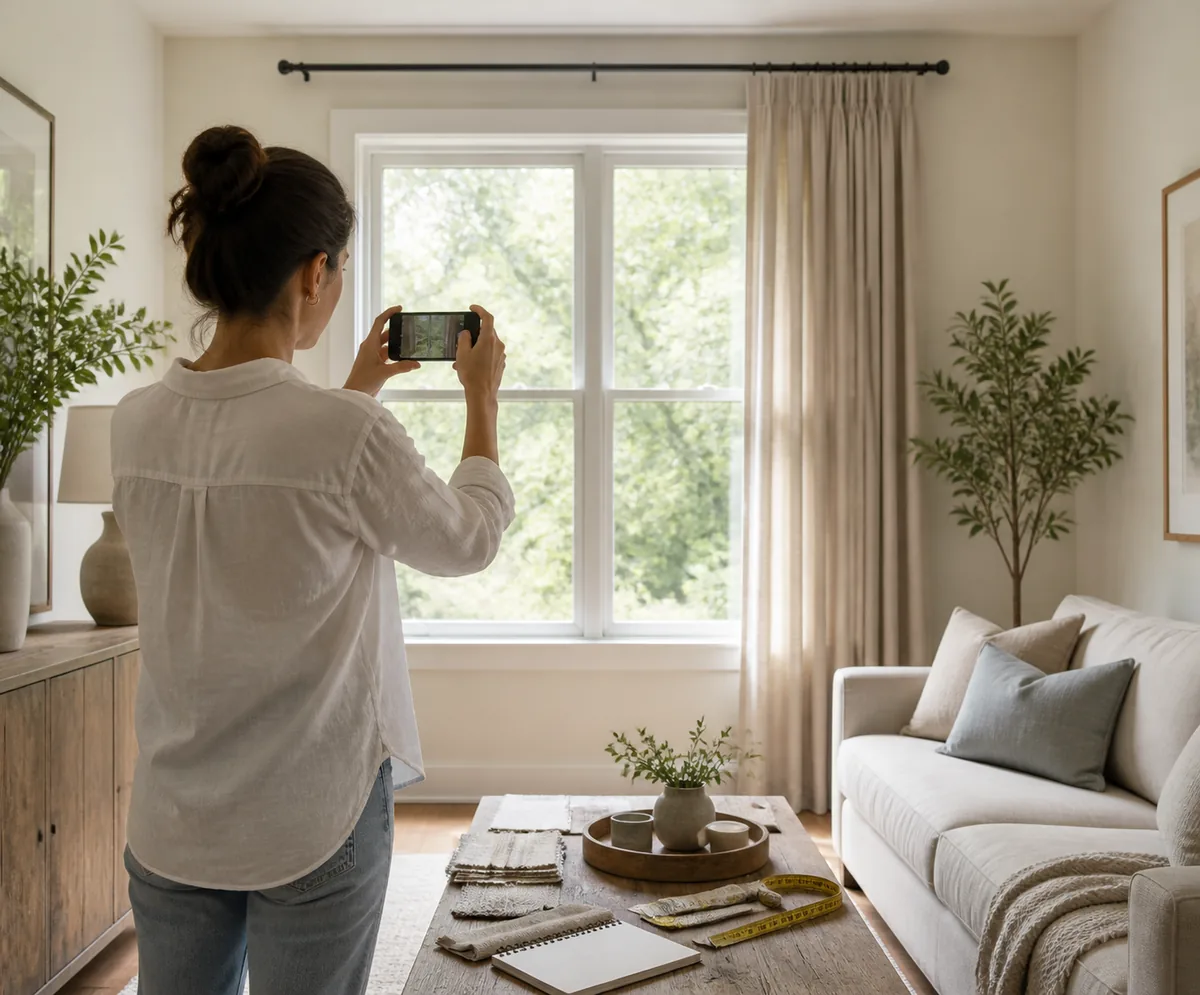
- 1. Photograph from a normal standing height. Include the whole window, nearby sofa or cabinet, floor, ceiling line, and light sources. Keep the phone level and avoid an extreme wide-angle lens that changes the window proportions.
- 2. Ask one design question at a time. Compare a warm linen panel, a white sheer, and a layered blackout setup separately. If you change the color, hardware, pattern, and furniture together, you will not know which decision helped.
- 3. Preserve fixed features in the prompt. Tell the tool to keep the window, wall, floor, furniture, and camera viewpoint. This makes the output easier to compare and exposes when the model has invented a larger window or moved the sofa.
- 4. Compare daylight and evening mood. Look at brightness, glare, privacy, fabric weight, and how the curtain relates to the rug and sofa. A design that looks calm in bright daylight may feel too dark under warm lamps.
- 5. Confirm with real samples and measurements. Use the shortlist to order fabric swatches, mark the proposed rod height with tape, and verify width, length, mounting, cleaning, and floor clearance before you purchase.
Match the Curtain Style to the Room Effect
The same window can support several modern curtain designs. Choose the effect you want first, then narrow the fabric, color, and hardware within that direction.
| Desired effect | Curtain direction | Helpful caution |
|---|---|---|
| More daylight | White or warm sheer with a light rod or track | Check privacy after dark and glare at the brightest hour. |
| Calmer and softer | Linen-look panels in oatmeal, cream, greige, or muted sage | Texture can read darker or warmer beside wood and warm bulbs. |
| More privacy | Lined panels, layered curtains, or a shade plus side panels | Make sure the treatment still opens enough for daytime light. |
| A taller-looking room | Full-height panels installed high with controlled vertical folds | Do not let the rod collide with molding or make the top gap awkward. |
| A stronger focal point | Low-contrast pattern, deep color, or a deliberate two-tone panel | Quiet the rug, cushions, and wall art so the window is not competing with everything. |
| A compact treatment | Roman shade or woven shade with short side panels | Check the stack, handle access, furniture clearance, and cleaning routine. |
What AI Curtain Previews Cannot Confirm
AI can make fabric folds look convincing while changing the window width, rod height, ceiling line, floor level, or furniture scale. Treat the render as a visual comparison, not a construction drawing or a promise that the final fabric will hang exactly the same way.
A preview also cannot confirm the true opacity, hand feel, color under your bulbs, washing behavior, fire or safety requirements, mounting strength, or whether a curtain will sit safely near a radiator, heater, pet, or child. Those decisions need product specifications and real measurements.
If an image shows a beautiful living room curtain design but the rod is too low, the panels stop above the floor, or the fabric blocks a door, use the mistake as a checklist. Correct the room in the next prompt, then verify the final idea with tape, samples, and a qualified installer when the hardware or opening is complex.
FAQ About Modern Curtain Designs for Living Room Spaces
What are the most popular modern curtain designs for a living room?
The most flexible directions are full-height linen-look panels, white sheers, layered sheer and blackout curtains, warm neutrals, subtle stripes, and low-contrast patterns. The right choice depends on daylight, privacy, window proportions, furniture, and how much visual weight the room can carry.
Should living room curtains touch the floor?
A clean floor kiss is usually the easiest modern finish because it looks intentional and is simple to maintain. A small break or puddle can work as a deliberate styling choice, but it needs extra fabric and is less practical around pets, children, dust, or uneven floors.
Are sheer curtains enough for a living room?
Sheers can be enough when the window is not exposed and you mainly want to soften daylight. They are often not enough for evening privacy or strong afternoon glare, so test the room after dark and consider a lined side panel or a second layer.
How wide should curtains be for several living room windows?
Measure the total area the treatment must cover, including the space beyond the glass, overlap, and the fabric stack when open. Similarweb question data also surfaced multi-window width and length concerns, which is a useful reminder to ask the retailer how finished panel width and fullness are calculated.
Do blackout curtains need a different size in a living room than a bedroom?
Not automatically. Size depends on the window, rod or track, fullness, overlap, and the amount of side coverage needed. A living room may use blackout fabric for glare or privacy but still need a lighter inner layer so the space does not feel closed during the day.
Can AI show curtains on my actual living room photo?
Yes. Upload a clear photo to the AI Living Room Design tool and compare one curtain decision at a time. Treat the result as a style shortlist, then check real samples, measurements, hardware, opacity, and installation constraints.
What color curtains work with a neutral living room?
Warm ivory, oatmeal, greige, muted sage, clay, charcoal, and soft brown can all work with a neutral room. Compare the sample beside the sofa, floor, wall, and evening lighting; a curtain that looks beige alone may look yellow or gray beside the room's fixed materials.
Preview Living Room Curtains on Your Own Photo
Upload a real living room image, compare curtain directions, and use the shortlist to plan samples and measurements before you buy.
Try AI Living Room Design