Quick answer: begin with one clear wall decision rather than a whole-room color list. A soft neutral can make a small bedroom feel lighter, a darker headboard wall can add depth, and a semicircle or two-tone block can create a focal point without repainting every surface. If you want to compare the result on your actual room, use the AI Room Paint Visualizer, then check samples in daylight and at night.
Start With the Bedroom Before Choosing Paint
Good bedroom wall painting design is less about collecting dozens of colors and more about understanding what the room needs. Write down these constraints before you compare finishes or search for bedroom wall designs paint ideas.
- Map the daylight: note whether the room faces morning or afternoon sun, how much artificial light it gets, and whether the color must feel comfortable after dark.
- Choose the visual anchor: the bed wall is usually the strongest candidate, but a window wall, wardrobe wall, or reading corner may make more sense in an unusually shaped room.
- Keep fixed materials in view: flooring, wood tone, tile, trim, curtains, and large furniture will influence whether a paint color reads warm, cool, gray, pink, or yellow.
- Decide how much contrast you can live with: a full accent wall is more committed than a painted arch, a low color block, or a narrow strip behind a headboard.
- Test the real surface: paint cards and digital previews help with direction, but a sample board shows texture, sheen, shadows, and how the color changes during the day.
12 Wall Painting Design Ideas for a Bedroom
Treat the following as twelve directions rather than twelve rules. The best result may combine one wall shape with one restrained palette, especially when the bedroom is small or already contains patterned furniture.
1. A calm full-height accent wall
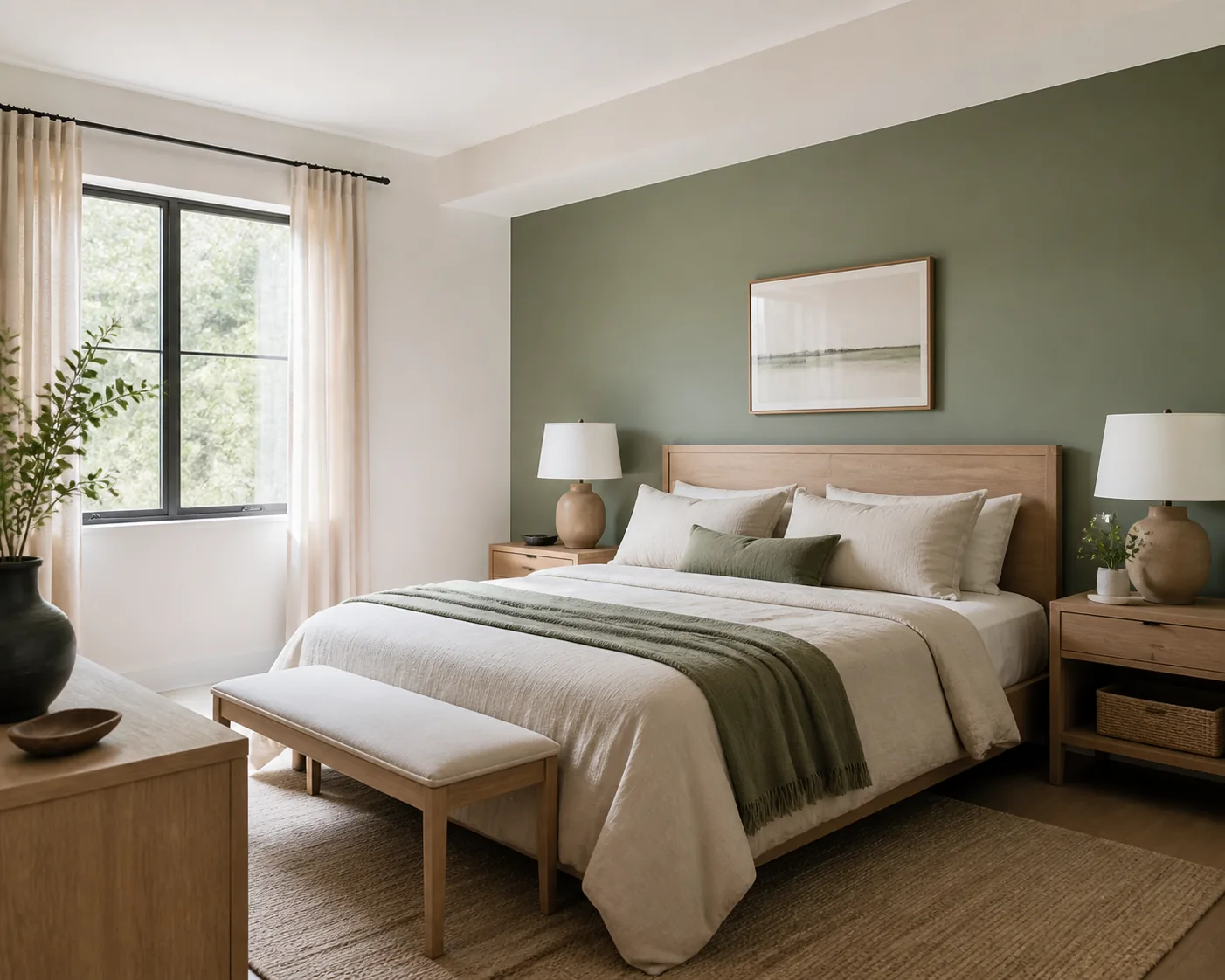
Paint the wall behind the bed in a muted green, clay, blue-gray, or warm taupe while keeping the other walls lighter. This gives the bed a visual home without making the room feel busy.
2. A warm neutral cocoon
Use one warm off-white, oatmeal, mushroom, or light beige across the walls, then create depth with linen, wood, and layered bedside lighting. This is a reliable master bedroom painting design when you want calm rather than drama.
3. A painted semicircle behind the bed
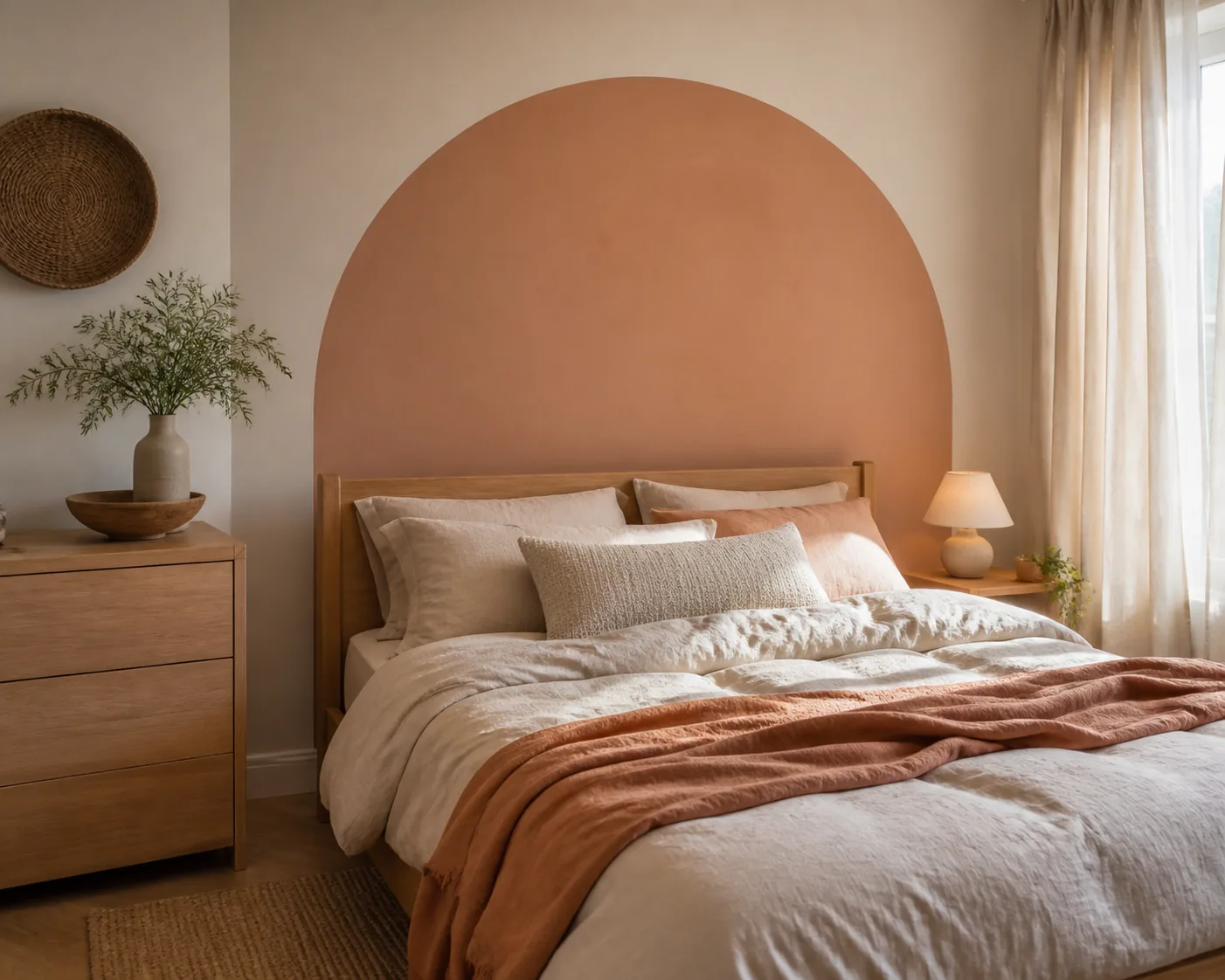
A semicircle or arch creates a headboard-like shape without adding another piece of furniture. It works especially well in compact rooms because the graphic shape adds focus without taking floor space.
4. A two-tone horizontal wall
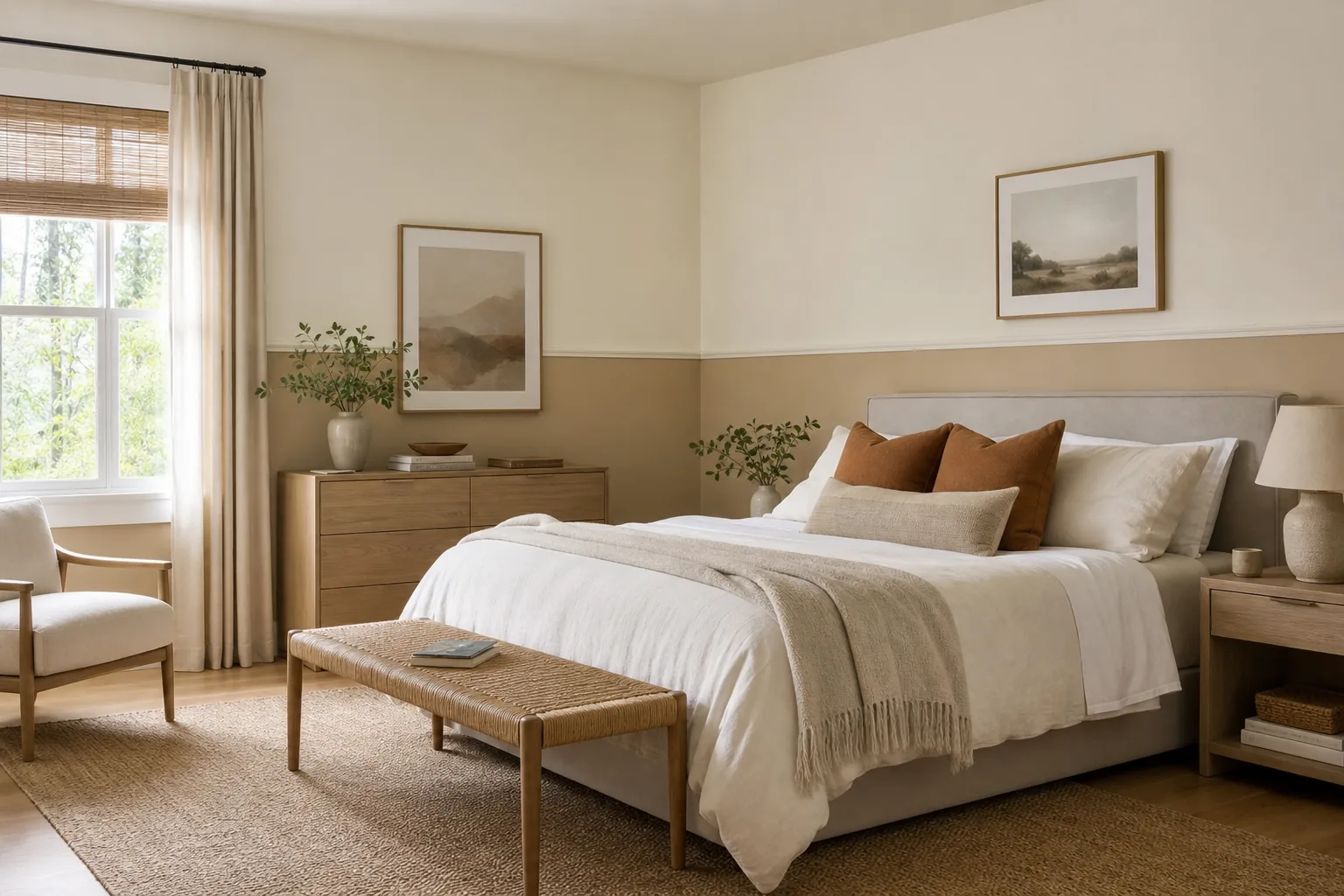
Split the wall into a lighter upper section and a deeper lower section, or reverse the balance for a more dramatic look. A clean horizontal line can make a tall room feel more grounded.
5. A soft color block behind a desk or vanity
If the bedroom includes a desk, dressing table, or reading seat, use a small rectangle or curved block to define that zone. It gives the extra function a place without painting the entire room.
6. A ceiling-and-wall wrap
Carry a gentle color from one wall onto the ceiling edge to make a large bedroom feel more enveloping. A pale dusty blue, muted olive, or warm plaster tone can work better than a hard dark ceiling.
How to Test Bedroom Paint Ideas Before You Commit
A photo preview is most useful when it answers a specific question: should the bed wall be darker, would a warm neutral work with the floor, or is a curved shape too strong for the room? Use a repeatable five-step check instead of judging one attractive render.
- 1. Photograph the room from a normal standing height. Include the bed, windows, floor, doors, curtains, and the main light sources. Avoid an extreme wide-angle view that changes the wall proportions.
- 2. Pick one paint decision at a time. Ask for a muted accent wall, a soft neutral, a semicircle, or a two-tone treatment separately. Mixing every idea in one request makes it difficult to learn what actually works.
- 3. Compare three levels of contrast. Try a close neutral, a medium accent, and a deeper color. The comparison shows whether you want a barely-there shift or a deliberate focal wall.
- 4. Check the room structure in every result. Look for the real window, door, bed width, wardrobe, outlets, and ceiling line. If the preview moves or invents them, use it only as mood inspiration.
- 5. Validate with samples and tape. Put sample boards on the wall, view them in morning and evening light, and mark the proposed arch or color line with painter’s tape before you buy the full amount.
Choose the Paint Direction by Room Effect
Color names are inconsistent across brands, so decide on the effect first. Then take a few swatches home and compare them beside the actual floor, bedding, curtains, and lamps.
| Direction | What it can do | Watch for |
|---|---|---|
| Warm off-white or oatmeal | Keeps a small room light while adding more softness than a stark white | Some beige shades become yellow under warm bulbs |
| Muted sage or olive | Adds a quiet natural accent behind the bed and works with oak or linen | Cool daylight can make gray-green paint feel flatter |
| Dusty blue or blue-gray | Creates a restful, slightly cooler backdrop and can balance warm flooring | Very blue shades may feel cold in a north-facing room |
| Clay, terracotta, or muted blush | Brings warmth and makes a semicircle or color block feel intentional | Strong orange or pink undertones can compete with wood and brass |
| Deep charcoal, navy, or forest | Adds depth and a hotel-like focal wall in a larger bedroom | Test the lighting and keep the rest of the palette visually quiet |
Use AI to Preview Wall Colors, Not to Skip Real Checks
The AI Room Paint Visualizer is useful for comparing paint moods on a real room photo. It can help you decide whether a wall should be warm, cool, light, dark, plain, or shaped before you spend time on sample pots and preparation.
For a more complete redesign, an AI bedroom design tool can explore furniture, lighting, and decor at the same time. Keep the tasks separate when possible: first choose the wall direction, then see whether the rest of the room supports it.
A digital preview cannot accurately promise the final paint color. Camera white balance, screen brightness, wall texture, sheen, and surrounding light all change the result. Use the image to narrow the shortlist, then trust physical samples and the real room.
What Bedroom Wall Paint Previews Cannot Confirm
AI can make a wall look smoother, move a switch, simplify a door, change the window light, or apply color beyond the intended edge. These errors are easy to miss when the overall image feels attractive.
A preview also cannot tell you whether the existing surface needs repair, primer, stain blocking, sanding, or a different paint sheen. It cannot replace the manufacturer’s coverage guidance or a professional assessment of moisture, mold, or damaged plaster.
Use wall painting design for bedroom images to compare direction, contrast, and mood. For a phrase such as “wall painting design for bedroom semicircle with design,” the practical next step is to measure the bed wall, mark the curve with tape, and check the shape from the doorway—not to copy the image blindly.
FAQ About Wall Painting Design for Bedroom
What is the best wall painting design for bedroom spaces?
There is no single best design. A calm full-height accent wall is the easiest starting point, while a semicircle or color block adds more personality with less paint. Choose based on daylight, bed position, furniture, and how much contrast you want at night.
Which bedroom paint design makes a small room feel larger?
A light, low-contrast palette usually keeps a small room feeling open. Protect clear floor space, use a soft wall color, and avoid making every wall a separate feature. A small painted arch can add focus without visually filling the whole room.
Is a semicircle accent wall difficult to paint?
It takes more preparation than a straight accent wall, but it is manageable if you center the shape carefully, use a template or measured string for the curve, and apply painter’s tape slowly. Test the proportions with tape before opening the paint.
How do I choose master bedroom painting designs that will still feel calm?
Start with one base neutral, one controlled accent, and texture from bedding or curtains. Deep colors can work well behind the bed, but keep lighting, trim, and large furniture simple so the room does not become visually noisy.
Can AI show how a bedroom wall color will look?
Yes. Upload a clear room photo to the AI Room Paint Visualizer to compare broad color directions. Treat the result as a visual shortlist and confirm the final color with physical samples.
Should bedroom walls and the ceiling be the same color?
They can be, especially in a large room where you want a cocooning effect. A lighter ceiling often keeps a smaller bedroom brighter, while a gentle wrap or narrow ceiling edge can make a taller room feel more balanced.
Preview Bedroom Wall Colors on Your Room
Upload a real bedroom photo, compare paint directions, and use the shortlist to plan samples before you repaint.
Try the Room Paint Visualizer