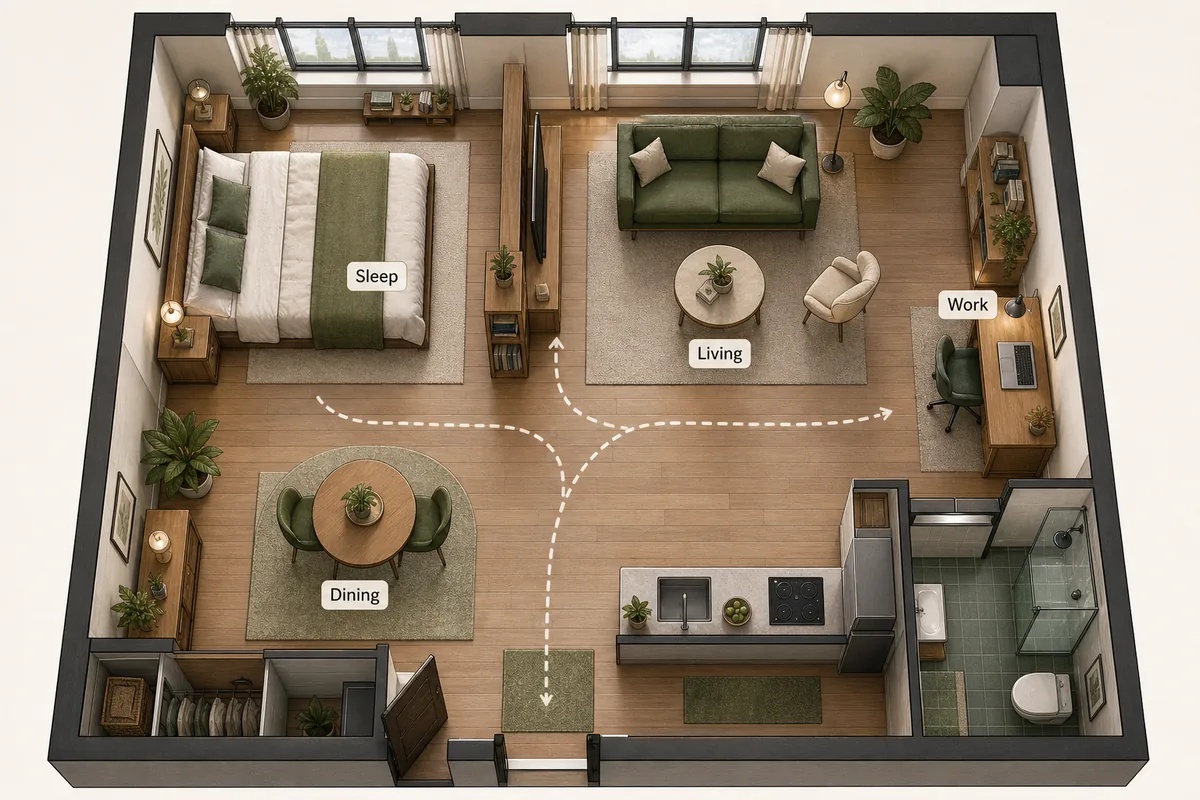
Quick answer: the best studio apartment layout planner workflow is to measure the shell, mark doors, windows, plumbing, closets, and outlets, choose one anchor piece, then divide the space into sleep, living, dining, work, and storage zones. Once the layout is practical, upload a room photo to AI Room Designer to preview styles before you buy furniture.
Why Studio Layout Comes Before Style
Studio apartments compress bedroom, living room, dining area, office, storage, and entry functions into one visible room. That is why the first question is not “Which style looks best?” but “Where can daily life happen without collisions?” A studio apartment layout planner should help you decide zones and clearance before you think about color palettes.
AI image tools are useful once the bones are clear. They can show how a Japandi, modern, cozy, or minimalist look may feel in your real space, but they do not reliably know whether a drawer can open or whether guests can walk around the bed. Keep layout decisions measurable and visual decisions experimental.
If you already have a floor plan, pair this guide with the upload floor plan and design workflow. If you only have a phone photo, start with the room photo and write down measurements separately before testing visual redesigns.
A Practical Studio Apartment Layout Workflow
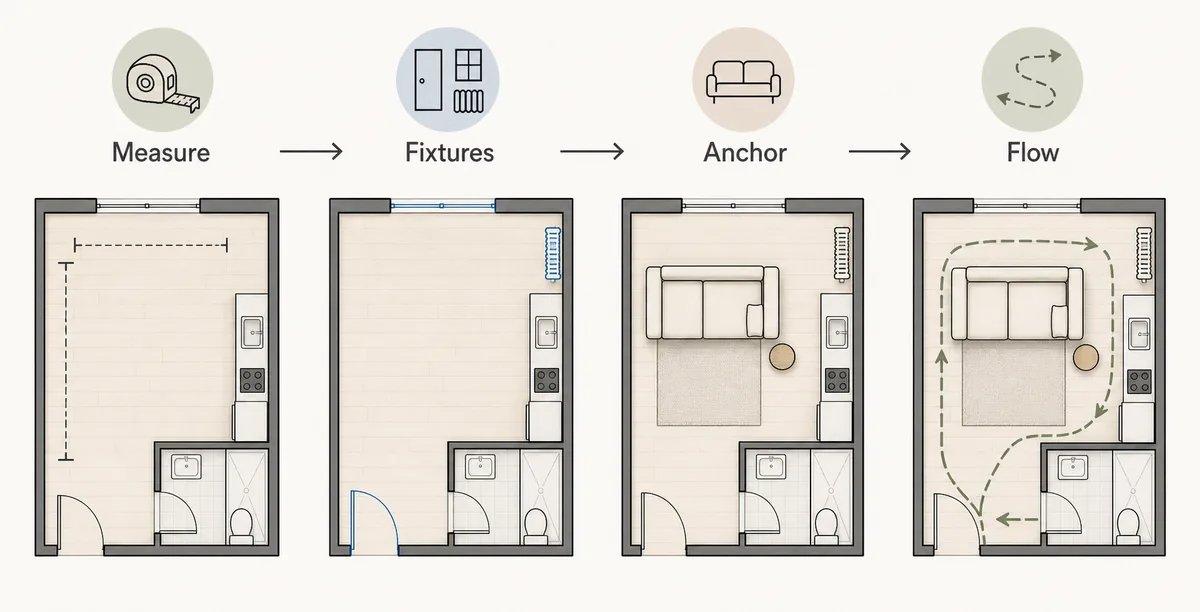
Use this sequence before buying any large furniture. It is simple enough for renters, but it also gives AI room previews better constraints.
1. Measure the usable rectangle
Write down wall-to-wall width, depth, ceiling height, window sill height, door swing, closet depth, radiator position, outlet zones, and any built-in kitchen or bathroom edges. The usable rectangle is often smaller than the advertised square footage.
2. Choose one anchor piece
Pick the item that controls the room: usually a bed, sleeper sofa, desk, dining table, or storage wall. Place this first. Everything else should support the anchor instead of fighting it.
3. Draw the daily walking loop
Map the path from entry to kitchen, bathroom, closet, bed, seating, and window. Keep the main route clear. In very small studios, a clean walking loop often matters more than adding another chair or shelf.
4. Test visual style after the layout works
When the floor plan feels usable, upload a real photo to a photo-based tool such as free AI interior design. Ask for style previews that preserve the same zones instead of moving every object randomly.
Studio Apartment Zones and Clearance Checks
A studio does not need walls to feel organized. Use rugs, lighting, shelf orientation, sofa backs, curtains, and storage height to separate functions while keeping the room visually calm.
| Zone | Best anchor | What to check | AI preview prompt angle |
|---|---|---|---|
| Sleep | Bed, daybed, murphy bed, or sleeper sofa | Side access, bedding storage, privacy from entry, outlet access | Ask for a calm sleeping zone that does not block daylight |
| Living | Compact sofa, lounge chair, media console, or low storage | TV distance, coffee table clearance, path to windows and kitchen | Ask for a small living area with open circulation |
| Dining | Drop-leaf table, round table, island stool, or wall desk | Chair pull-out space and whether the table doubles as work space | Ask for a flexible dining and work corner |
| Work | Wall desk, console desk, folding table, or shelf desk | Natural light, cable access, chair clearance, background for video calls | Ask for a compact work zone that blends with decor |
| Storage | Wardrobe, under-bed bins, vertical shelving, entry bench | Door swings, visual clutter, items used daily vs seasonal items | Ask for built-in-looking storage without making the room heavy |
Layout Examples for Common Studio Shapes
Long narrow studio
Place the bed at the quieter end and keep storage on one long wall. Use a small sofa or dining bench to create a middle living zone, then leave a straight path along the opposite wall. Avoid floating large furniture in the center unless the room is wide enough.
Square studio
A square studio often needs a strong anchor because every zone competes equally. Put the bed in one corner, use a rug to define the living area, and choose a round dining table or wall-mounted desk to reduce sharp circulation conflicts.
Studio with open kitchen
Treat the kitchen edge as a fixed boundary. A small island, counter stools, or drop-leaf table can become the dining zone, but do not block the fridge, oven, or dishwasher. Use AI kitchen design previews only after appliance clearances are protected.
Bedroom-like studio corner
If the bed is the visual problem, use a low bookcase, curtain, slatted screen, or rug change instead of a heavy wall. For more style options around the sleeping area, compare ideas in the AI bedroom design workflow.
Common Studio Layout Mistakes
The first mistake is buying apartment-size furniture without checking real clearance. “Small sofa” and “compact bed frame” are marketing terms, not measurements. Always check total depth, delivery path, drawer pull-out, and the space needed to walk around the item.
The second mistake is using too many tiny pieces. A studio usually feels calmer with fewer, more useful pieces: one storage wall instead of five scattered shelves, one flexible table instead of a separate desk and dining table, and one strong rug rather than several small rugs.
The third mistake is hiding every function. A studio is still one room. Instead of pretending it is a one-bedroom apartment, make each zone intentional. Clean lines, consistent wood tones, and repeated accent colors often make the space feel larger than a crowded divider strategy.
How to Use AI Without Losing Practicality
AI is strongest after you know what must stay fixed. Upload a photo from the main entry or a corner that shows the room depth, then describe the layout constraints in plain language: keep the bed on the left wall, keep a clear path to the bathroom, preserve the window, and add storage without blocking the kitchen.
Use style prompts to compare mood, not to approve measurements. For example, ask for “warm minimalist studio apartment with a defined sleeping zone and compact work desk” or “Japandi studio layout with visible storage and open walking path.” For stronger prompting patterns, use the AI interior design prompts guide.
When a preview looks good, translate it back into a shopping checklist: bed width, rug size, storage height, table diameter, lamp type, curtain length, and maximum sofa depth. This keeps the AI result useful instead of becoming a pretty image you cannot implement.
FAQ
What is the best layout for a studio apartment?
The best layout depends on the room shape, but most studios work better when the bed, living zone, work or dining surface, and storage are separated by rugs, lighting, furniture orientation, or low dividers while the main walking path stays clear.
Can AI create a studio apartment layout?
AI can help visualize layout ideas and interior styles, but you still need real measurements. Use AI for concept previews after you confirm doors, windows, fixed kitchen or bathroom edges, storage needs, and furniture clearance.
Should I use a room layout generator or a photo-based AI room designer?
Use a room layout generator for scale, furniture fit, and circulation. Use a photo-based AI room designer for style, colors, materials, lighting, and mood once the basic layout is practical.
How do I make a small studio feel less crowded?
Choose fewer multi-use pieces, keep one clear walking loop, use vertical storage, repeat materials, and avoid blocking windows. A consistent palette and planned storage usually help more than adding extra decor.
Preview your studio after the layout is clear
Use measurements to protect the floor plan, then upload a room photo to test interior styles, color palettes, furniture mood, and small-space design direction.
Try AI Room Designer